
Meditation and mindfulness: techniques to reduce stress!
Focusing on the present for 10 to 15 minutes can help you reduce cortisol levels and calm your mind.
Advertisements
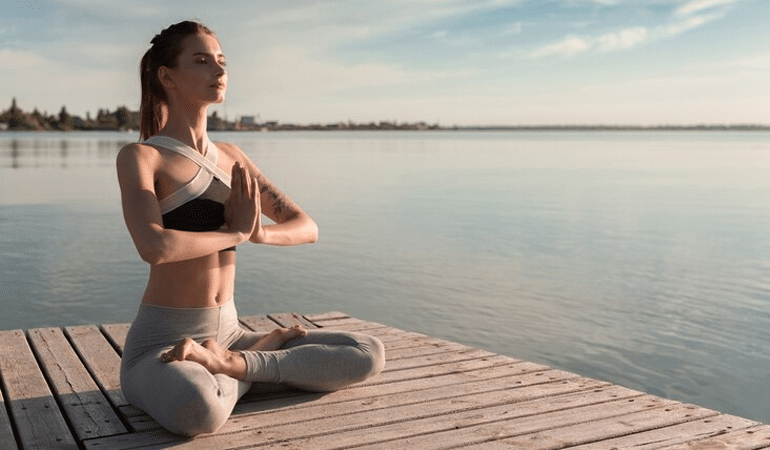
In a world full of professional pressures, family commitments and daily personal demands, finding ways to reduce stress and restore emotional balance becomes a matter of survival. Therefore, practicing meditation and mindfulness can help you face challenging and stressful situations with more serenity and mental clarity. But how is this possible?
Meditation: an inner journey to tranquility
Meditation concerns an ancient practice that has demonstrated numerous advantages for the mental and physical health of those who practice it. In simple terms, it involves focusing the mind on a specific object, thought or activity, allowing us to remove ourselves from the hustle and bustle of the outside world.
Currently, a study carried out by scholars from the Max Planck Institute and the University of Dresden has proven that Meditation can significantly reduce chronic stress. When researchers discovered that volunteers who meditated had reduced cortisol levels, they saw meditation as a powerful tool.
By reducing chronic stress, meditation mitigates one of the main risk factors for heart attacks and strokes. And the best part: this practice, free of cost, free of side effects and accessible to everyone, can be adopted anywhere. The secret is in taking the first step.
It is important to say that in addition to emotional control, meditation helps with mental clarity, enabling you to deal with challenges in a more serene way. Not to mention that it improves your ability to focus, preventing intrusive thoughts from taking control.
Mindfulness and the art of being present in the here and now
Mindfulness is the practice of being fully present in the current moment, accepting it without judgment. This involves paying attention to the thoughts, emotions and physical sensations that arise without trying to change them, letting them pass without any resistance.
Mindfulness can be an effective tool for reducing stress due to several factors. Starting with the fact that it helps reduce automatic reactions to stressful situations, enabling you to respond in a more conscious and balanced way.
In this way, the technique promotes the understanding that stress is a natural part of life. Based on this understanding, mindfulness helps in managing thoughts from the future or past to the present, avoiding vain and unnecessary worries.
How can you incorporate meditation and mindfulness into your life to reduce stress?
Whether you're looking for deep relaxation, mental clarity or stress management, meditation and mindfulness can help. Here are some tips on how to put both techniques into practice:
1. Choose a calm space
Find a calm environment where you can practice meditation without distractions. It could be a quiet space in your home, a serene park, or even a bench in a garden. Choosing the right environment is essential to creating a space conducive to meditation.
2. Set a regular schedule
Set a consistent time to practice meditation. You may not believe it, but even 10 to 15 minutes can make a big difference.
In addition, try to consistently follow the stipulated schedule. It can be in the morning, before bed, or whenever is most convenient for you. Thus, the routine will help you create a habit and integrate meditation into your daily life.
3. Adopt a comfortable posture
When it's time to practice meditation, sit comfortably, whether in a chair, meditation cushion or even on the floor. Also, remember to keep your back straight to promote concentration and focus.
4. focus on the breath
It is essential to highlight that Breathing is the foundation of meditation. Therefore, focus on breathing, following the flow of air in and out. Paying full attention to your breathing will help calm your mind and maintain focus on the present.
5. Practice observation
Meditation and mindfulness are not about avoiding thoughts, but about observing them without judgment and letting them go without taking them for reflection content. So, when thoughts arise, acknowledge them and gently return your attention to your breathing.
6. Use meditation guides (if necessary)
If you are new to meditation and have difficulty focusing on the present moment, the apps and guided meditation videos can be useful. This is because meditation guides provide detailed instructions and topics to meditate on, such as gratitude, relaxation or, in this case, reducing stress.
7. be consistent
Although it may seem difficult at first, meditation is an exercise that requires regular practice. So even if it initially seems challenging, keep persevering. Over time, you will reap the benefits of the practice.